
Table of Contents
- Why Peptide Reconstitution Standardisation Matters in In Vitro Research
- Building a Standard Operating Procedure for Peptide Reconstitution
- Peptide Solubility Testing Before an Assay
- Peptide Storage and Stability Protocols After Reconstitution
- Independent Analytical Verification and Batch Documentation
- Common Mistakes That Undermine Reconstitution Consistency
- Conclusion
- Frequently Asked Questions
Last Updated: 18 September 2026
Why Peptide Reconstitution Standardisation Matters in In Vitro Research
Standardising peptide reconstitution for in vitro studies is the practice of dissolving a lyophilised peptide in a defined solvent, at a defined concentration, using a documented method that every researcher in the lab follows the same way. This guide explains how to build that method, test it, and record it so results hold up.
The reason it matters is simple: a stock solution is the starting point of every downstream assay. Get the concentration wrong, use the wrong solvent, or leave a vial at room temperature for an afternoon, and the assay measures your handling, not your hypothesis.
Most published methods sections describe the assay in detail and the reconstitution in a single line. That gap is where reproducibility quietly breaks down.
Below, we cover the full workflow: writing a standard operating procedure, running peptide solubility testing before an assay, storage and stability protocols, and how independent analytical verification and batch documentation close the loop.
Building a Standard Operating Procedure for Peptide Reconstitution
A peptide reconstitution standard operating procedure is a written, version-controlled document that states the solvent, target concentration, equipment, and handling steps for each peptide in the lab, so any trained researcher can reproduce the same stock solution. It is the single highest-value document in a peptide workflow.
Start with the essentials. Each SOP should capture:
- Peptide name, batch number, and supplier documentation reference
- Recommended solvent and any co-solvent needed for dissolution
- Target stock concentration and final working concentration
- Equipment list: calibrated pipettes, glassware, water grade
- Step-by-step dissolution sequence and mixing method
- Acceptable appearance after dissolution
- Labelling format and storage location
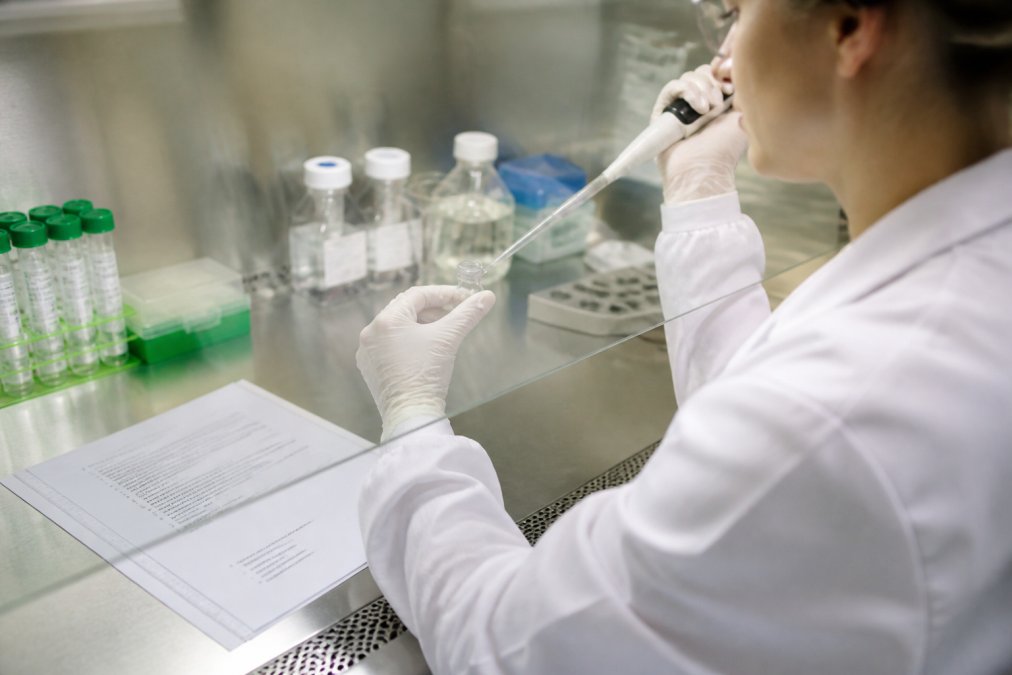
Documenting Solvent Choice, Concentration and Handling
Solvent choice is peptide-specific and should never be assumed. Some sequences dissolve readily in water; others need a small amount of a co-solvent before dilution. The supplier’s documentation is the starting point, not a suggestion.
Record the exact solvent grade, the order of addition, and the mixing method. Note whether the solution was vortexed, swirled, or left to stand, and for how long. A common mistake is under-documenting these small steps. In practice, this means a method that works perfectly for one researcher fails for the next.
Also log the date, time, operator initials, and the vial’s post-reconstitution storage location. If a result looks odd three weeks later, that log is the first thing anyone checks.
Peptide Solubility Testing Before an Assay
Peptide solubility testing is a small, structured check that confirms a peptide has fully dissolved in the chosen solvent before it is used in an assay. It is not a pass-or-fail purity test. It is a practical observation step that catches problems early.
Run it before every new batch, not just new peptides. Here is a simple sequence:
- Reconstitute a small portion using the documented method
- Inspect against a dark and light background
- Note clarity, colour, and any visible particles
- Check for undissolved material at the vial base
- Record observations against the batch number
- Hold the solution briefly before use if the SOP requires it
Reading Solubility Observations Without Over-Interpreting Them
Visible particles or haze are worth recording, but they are not automatically a purity problem. They can point to incomplete dissolution, a solvent mismatch, or a handling issue.
Do not assume a cloudy solution means the peptide is degraded. The most common cause is incomplete dissolution or the wrong solvent order. Discarding a batch on appearance alone wastes material and tells you nothing about the actual cause.
What most guides miss is that solubility observations are only useful when paired with the batch documentation. A clear solution from an undocumented batch is less trustworthy than a slightly hazy one with a full record behind it.
Peptide Storage and Stability Protocols After Reconstitution
Peptide storage and stability protocols define how a reconstituted solution is kept, for how long, and under what conditions before it is used. Once a peptide is in solution, it is generally less stable than the lyophilised powder, so storage discipline matters more, not less.
A workable protocol covers:
- Short-term holding conditions for solutions in active use
- Longer-term storage conditions for stock solutions
- Whether aliquoting is required, and at what volume
- Labelling rules: peptide, concentration, solvent, date, operator
- A defined review date for each stored solution
- Rules for freeze-thaw cycles, ideally avoided by aliquoting
Aliquot stock solutions at the point of reconstitution rather than drawing from one large vial repeatedly. It takes ten extra minutes and removes freeze-thaw variability from your assay entirely.
Keep the protocol short enough that people actually follow it. A two-page document that gets used beats a ten-page one that sits in a drawer.
Independent Analytical Verification and Batch Documentation
Independent analytical verification means a batch has been checked by a laboratory separate from the supplier, using methods such as HPLC and mass spectrometry, with the results recorded in a batch-specific certificate of analysis. Batch documentation is what turns a claim into something a reviewer can check.
At VOREVIA, batch-specific documentation sits at the heart of how materials are supplied, because a certificate that cannot be tied to a specific batch number is of limited use in a methods section or an audit.
When assessing documentation, look for:
- A batch number that matches the vial label exactly
- The analytical method used and the laboratory that ran it
- Identity confirmation, not just a purity figure
- A date of analysis and a clear document reference
- Consistency between the certificate and the product specification
The MHRA guidance on good laboratory practice and analytical quality sets out the wider expectations for documentation and traceability that research labs work within. For analytical method context, the United States Pharmacopeia general chapters on peptide analysis is widely referenced for method principles, though UK labs will typically follow their own validated in-house methods.
If a supplier cannot produce batch-linked documentation on request, that is your answer. Transparent sourcing means the paperwork travels with the vial.
Common Mistakes That Undermine Reconstitution Consistency
Most consistency failures trace back to a handful of repeat offenders, and none of them are exotic.
| Mistake | Why it happens | Fix |
|---|---|---|
| Undocumented solvent choice | Assumed from memory | Record solvent and grade in the SOP |
| No batch number on the label | Rushed labelling | Label peptide, batch, date, operator |
| Repeated freeze-thaw cycles | Single large stock vial | Aliquot at reconstitution |
| Solubility judged by eye only | No written observation step | Log clarity and particles per batch |
| Certificate not matched to vial | Filed separately | Cross-check batch number before use |
A common mistake is treating reconstitution as preparation rather than as part of the experiment. It is part of the experiment. Every variable you fail to control here shows up later as unexplained scatter.
If a result cannot be traced back to a documented batch, a documented solvent, and a documented concentration, it is not reproducible. It is an anecdote.
Conclusion
The hard part of peptide research is rarely the assay. It is the discipline of doing the same small steps the same way, every time, and writing them down.
VOREVIA supports that discipline through independent analytical verification, batch-specific documentation, and clear product information, alongside a research-use-only catalogue that includes compounds such as BPC-157 10mg, TB-500 10mg, GHK-Cu 50mg and BAC Water 10ml for laboratory work.
A consistent SOP, honest solubility observations, and batch-linked certificates are what make a result stand up to scrutiny.
SHOP RESEARCH COLLECTION →
Frequently Asked Questions
Why is standardisation of peptide reconstitution critical for in vitro reproducibility?
Small differences in solvent, concentration or handling between batches can shift how a peptide behaves in an assay, so results become hard to compare across experiments or replicate in another laboratory. A written peptide reconstitution procedure fixes the solvent, the target concentration, the mixing method and the documentation for every vial. When each step is recorded and repeated, any change in observed results is more likely to reflect the biology under study rather than an avoidable handling variable.
What are the common solvents used for peptide reconstitution in laboratory research?
Most research peptides dissolve readily in sterile water or a suitable buffer, while some hydrophobic sequences need a small amount of an organic solvent such as dimethyl sulphoxide or acetonitrile before being diluted into aqueous buffer. The right choice depends on the peptide’s sequence and the assay buffer it will enter, because residual organic solvent can affect cell viability in in vitro work. Check the batch documentation and solubility testing notes before fixing a solvent in your standard operating procedure.
How should peptides be stored after reconstitution to maintain stability?
Once in solution, most peptides are less stable than the lyophilised powder, so peptide storage and stability protocols usually recommend aliquoting into single-use volumes, avoiding repeated freeze-thaw cycles, and keeping working solutions refrigerated for short-term use. Protect solutions from light where the sequence is light-sensitive, and record the reconstitution date on every aliquot. If a solution shows cloudiness, colour change or visible particles, discard it rather than using it in a sensitive assay.
What role does batch-specific documentation play in peptide quality assurance?
Batch-specific documentation links a specific vial to its analytical record, typically including identity confirmation and purity data generated by methods such as HPLC and mass spectrometry. That record lets you check the material you received against what was ordered and supports independent analytical verification rather than relying on a general product description. In practice, batch traceability makes troubleshooting far easier: if an assay underperforms, you can confirm the peptide’s identity and stated purity before changing your own protocol.